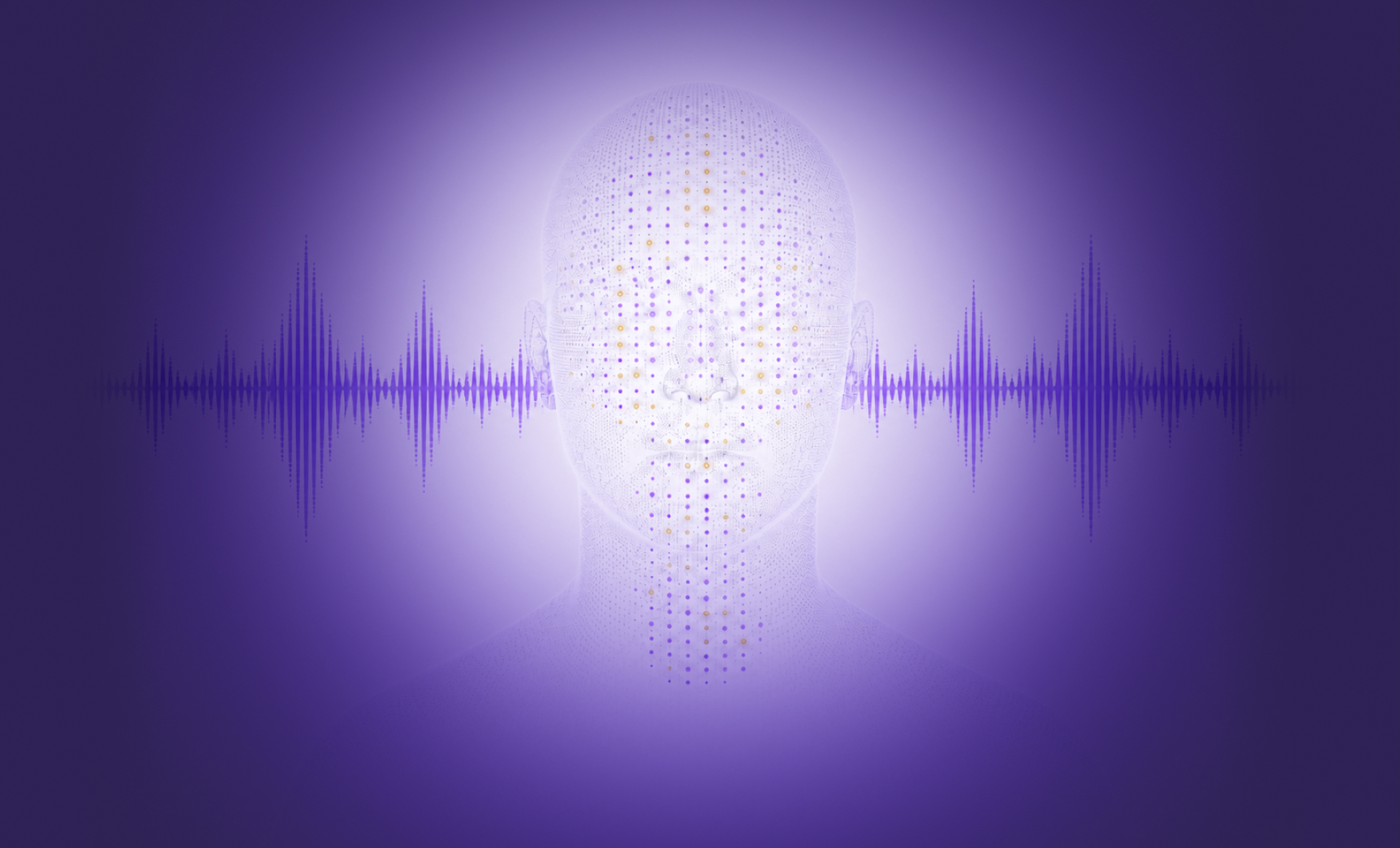
A couple of years ago, deepfake fraud sat mostly in the realm of theory. It was something security teams talked about in the abstract, not something they expected to run into on a Tuesday afternoon. That’s no longer true. By 2026, a usable voice clone can be built from three to five seconds of recorded audio, and video deepfakes have grown convincing enough to slip past authentication checks and stand in for executives on live video calls.
One case made the stakes concrete: a finance worker at a multinational firm paid out roughly $25 million after joining a video meeting in which every other participant, including the company’s CFO, turned out to be an AI-generated deepfake.
It wasn’t a fluke. Deepfake incidents in the fintech sector jumped 700% in a single year, as criminals used synthetic faces and cloned voices to defeat video KYC, open fraudulent accounts, and authorize large transfers. Voice cloning has become the attacker’s tool of choice, largely because it’s so cheap and fast to produce.
Banks are responding. What’s changing is how they respond. Real-time deepfake detection is moving to the center of fraud prevention, and the sharper institutions are realizing that catching a fake video or audio file is only the start of the work.
Why Traditional Fraud Detection Falls Short
Most fraud systems are predictable by design. They watch for anomalies at fixed checkpoints: login, transaction, account change. The trouble is that deepfakes are built to walk straight through those checkpoints. A fraudster wearing someone else’s face or voice isn’t trying to look unusual; the entire point is to look ordinary.
Onboarding is where the gap shows up most clearly. Modern deepfake tools can generate a live synthetic face that reacts to liveness prompts in real time, blinking and turning on cue, which is exactly the signal banks rely on to confirm a real human is present. A convincing voice takes only a few seconds of sample audio, and there are already documented cases of cloned voices pushing transfers through by posing as legitimate customers.
The result is what fraud teams now call the synthetic identity, or “synthetic borrower”: a persona stitched together from a deepfake video and a cloned voice that reads as entirely natural to the model evaluating it. That isn’t an accident. These identities are engineered to look normal to the system.
How Banks Are Fighting Back with AI
The response has been to push AI into the detection layer itself, not just for transaction monitoring but for verifying the authenticity of the media and biometric signals behind identity checks and high-value approvals. Three approaches stand out.
Multimodal, real-time media verification. Rather than leaning on a single test such as a voice match or a facial scan, banks are layering checks across voice, video, behavioral biometrics, and device signals. The more elaborate the deepfake, the more likely it trips one of the other checks. The best tools now flag manipulated media in under three seconds.
Passive liveness detection at onboarding. A growing number of banks have shifted video KYC to passive liveness detection, where the system confirms a real human in the background without asking the customer to perform any visible action. Active prompts, the “blink and turn your head” variety, can be defeated by a live deepfake, so the check that draws no attention often turns out to be the harder one to fool.
Behavioral and pattern-based signals alongside the media. Beyond the media itself, banks are widening the lens to catch device fingerprints that don’t match the supposed user, behavioral patterns that don’t add up, and gaps between a claimed identity and any verifiable history. A single deepfake video can be flawless. Fabricating an entire, consistent digital footprint to stand behind it is a much taller order.
Detection Is Only Step One
Here’s the insight most teams overlook. Even excellent deepfake detection, the kind that catches a fraudulent video or voice mid-attack, answers exactly one question: is this piece of media fake? It leaves the more important questions wide open.
Deepfakes almost never travel alone. A clip impersonating an executive authorizing a transfer might look like a self-contained problem, but it’s usually one moving part in a larger operation, tied to spoofed domains, fake social accounts, bogus investment offers, and other supporting infrastructure. When a suspicious video surfaces, the question a security team actually needs to answer is whether it belongs to a wider campaign.
Without a connected workflow, analysts end up assembling that picture by hand, across disconnected tools, while the campaign keeps running. As we’ve written before, detection is only the beginning of the investigation.
Where Bolster AI Fits
This is the gap Bolster AI’s Deepfake Detection is built to close. Rather than treating deepfake analysis as a standalone step, Bolster AI runs media verification inside the same platform teams already use to investigate and disrupt impersonation campaigns. The detection itself is powered by Reality Defender, which brings multimodal verification across voice, video, and images, while Bolster AI supplies the external threat intelligence, impersonation discovery, investigation workflows, and takedown operations around it.
So when a clip is flagged as a deepfake, the analyst immediately sees how it connects to the rest of the attack: the spoofed domains, the fraudulent social profiles, the phishing pages, and the rest of the infrastructure carrying the campaign across the external attack surface. Detection becomes the entry point to an investigation rather than the end of one. (Bolster AI is mostly AI-driven, with human analysts in the loop for edge cases and complex threats.)
What This Means for Banks Going Forward
Two things follow for financial institutions.
Real-time deepfake detection is no longer optional. As the tools to generate synthetic media get cheaper, faster, and more convincing, any bank process that verifies a person by voice or video needs an automated way to judge whether that person is real.
Detection has to connect to investigation and response. Flagging a deepfake is the opening move, not the closing one. Once a system surfaces one, the bank needs to understand what it means and where it fits, which means linking a specific video or voice recording back to the domains and infrastructure behind the broader campaign.
The Bottom Line
Deepfake technology will keep improving, and the banks that keep pace won’t simply be the ones with the most accurate detectors. They’ll be the ones that can act fast once something is flagged and trace it back to its source, turning a single caught fake into the thread that unravels the whole operation.
See how Bolster AI helps security teams validate suspicious media, uncover the infrastructure behind it, and accelerate takedowns across the external attack surface. Request a demo.