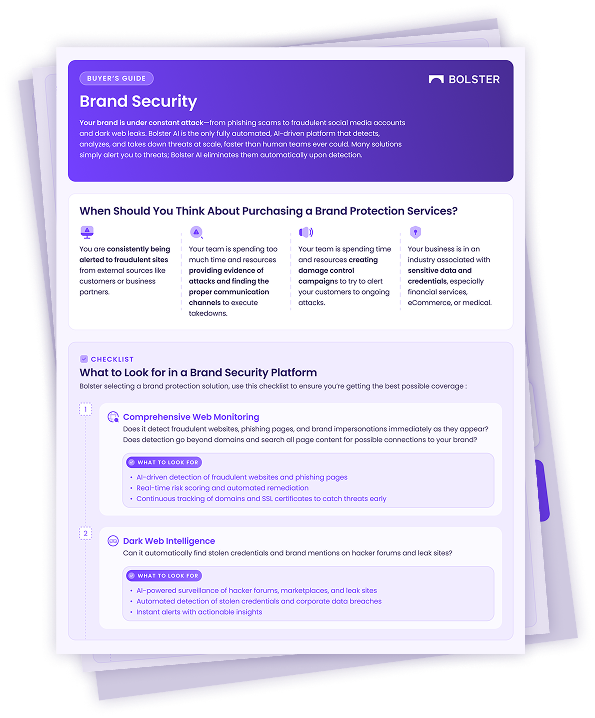
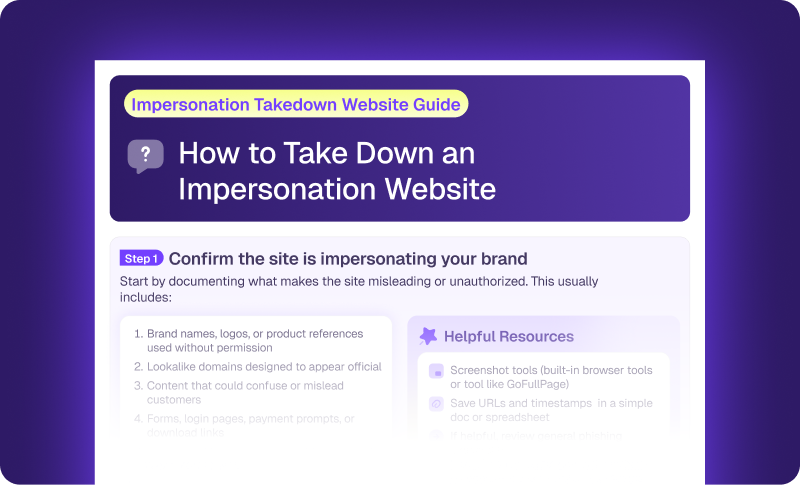
Digital risk protection (DRP) is a comprehensive security approach that uses tools, strategies, and intelligent automation to detect, analyze, and neutralize threats targeting an organization’s external-facing digital assets. This includes websites, social media accounts, cloud infrastructure, and third-party integrations.
Unlike traditional cybersecurity that focuses on internal networks, DRP specifically protects the digital assets visible to the public and attackers, preventing account takeovers, data leaks, phishing attacks, and reputational damage. DRP efforts focus on protecting the organization’s external-facing digital assets from cybersecurity risk, insider threats, data leaks, automation risk, cloud technology risk, and third-party risk.
How Do Cyber Threat Intelligence Solutions Differ from Digital Risk Protection?
DRP systems are often considered synonymous with cyber threat intelligence (CTI) solutions, even though the two ideas are not the same. If anything, DRP is an extension of CTI. The main focus of digital threat intelligence is to improve the organization’s security posture so it can better withstand cyberattack attempts. DRP is more proactive since it focuses on keeping up with the organization’s expanding threat landscape, detecting threats, and preventing cyberattacks.
DRP involves the use of CTI insights plus intelligent algorithms and multiple reconnaissance methods to find and analyze threats in real time and raise warnings of imminent attacks to digital assets. Effective DRP can ease the burden of threat detection and mitigation on security teams. These threats and attacks may involve:
- Account takeovers
- Data leaks
- Fraud or extortion campaigns
- Reputational damage
- Fraudulent social media accounts
- Spoofed enterprise domains
DRP based on comprehensive CTI supports multiple use cases. It provides comprehensive protection from phishing, which is one of the most common attack vectors used by modern-day cybercriminals, and more.
| Use Case | Threat Type | Protection Method |
|---|---|---|
| Phishing Prevention | Phishing sites, spoofed domains | Automated detection and takedown across web and email |
| Supply Chain Security | Third-party breaches, vendor compromises | Continuous monitoring of vendor digital assets and breach notifications |
| Dark Web Monitoring | Stolen credentials, leaked data, attack planning | Real-time monitoring of illegal marketplaces and forums |
| Vulnerability Prioritization | Alert overload, missed critical threats | Intelligent algorithms rank alerts by business impact |
| Fraud Detection | Fraudulent accounts, counterfeit products | Image recognition and behavioral analysis across social and web |
| Mobile Security | Malicious apps, app store threats | App store scanning and malware detection |
| Brand Protection | Reputational damage, counterfeit content | Fraudulent social media accounts and impersonation detection |
According to the 2024 Verizon Data Breach Investigations Report, phishing remains the leading cause of data breaches, accounting for 36% of all breaches and 84% of social engineering attacks.
Why Is Automation Critical to Modern Digital Risk Protection Systems?
Modern DRP solutions provide automated data handling and analysis capabilities, which is crucial to keep security teams from getting overwhelmed by threat intelligence data and overlooking relevant, potentially dangerous threats. According to Fast Company, 62% of security practitioners report that alert fatigue contributes to organizational turnover.
The intelligent algorithms in DRP platforms automatically sift through masses of security data and prioritize alerts so teams can address the most pressing issues and protect the organization.
Automated DRP can continuously and effectively find and address risks to the organization’s digital assets in real time. Responses are based on predefined criteria and initiated automatically, thus ensuring better security for users and data.
As part of a proactive defensive strategy, automated DRP can effectively counter risks across an organization’s entire digital footprint. Over time, it empowers organizations of any size and in any industry to improve operational efficiency and protect their brand reputations.
Frequently Asked Questions About Digital Risk Protection
Q: What is the difference between digital risk protection and traditional cybersecurity?
A: Traditional cybersecurity primarily protects internal networks and systems. Digital risk protection specifically secures external-facing digital assets (websites, social media accounts, cloud infrastructure, and third-party integrations) that are directly exposed to attackers and the public. DRP uses automated threat detection and real-time response to prevent attacks before they impact the organization.
Q: Can DRP tools monitor the dark web?
A: Yes. Modern DRP solutions include dark web monitoring capabilities that track illegal marketplaces, forums, and data auctions where stolen credentials, personal information, and attack plans are bought and sold. This visibility allows security teams to detect breaches and leaked data before criminals can exploit them.
Q: How does automation improve digital risk protection?
A: Automation enables DRP systems to continuously analyze massive volumes of threat data, automatically prioritize the most critical threats, and initiate responses based on predefined rules, without requiring manual review. This prevents alert fatigue, accelerates response times, and allows security teams to focus on strategic work rather than routine threat analysis.
Q: What specific threats can DRP systems detect and stop?
A: DRP systems detect and neutralize phishing sites, spoofed enterprise domains, fraudulent social media accounts, counterfeit websites, malicious mobile apps, account takeover attempts, data leaks, credential theft, and fraud or extortion campaigns. Many platforms use image recognition and AI to identify threats across websites, social media, app stores, and the dark web simultaneously.
Q: Is digital risk protection suitable for organizations of all sizes?
A: Yes. Automated DRP solutions are designed to scale across organizations of any size and in any industry. The automation capabilities make DRP particularly valuable for mid-market and enterprise organizations that lack the security staff to manually monitor threats across their entire digital footprint.
Why Bolster
Bolster is the only automated digital risk protection platform in the world that detects, analyzes, and takes down fraudulent content across the web, social media, app stores, and even the dark web. It incorporates state-of-the-art technology to protect enterprise external attack surfaces—without the need for legacy solutions or time-consuming manual efforts.
Our automated DRP platform uses image recognition to detect a wide range of threats. It provides 360-degree coverage and immediate visibility into counterfeit websites, fraudulent content, phishing sites, and many other digital risks. With Bolster, security teams can consolidate up to five tools and automate the detection, analysis, and rapid removal of threats from their digital ecosystem.
To try Bolster for free, schedule a complimentary demo.